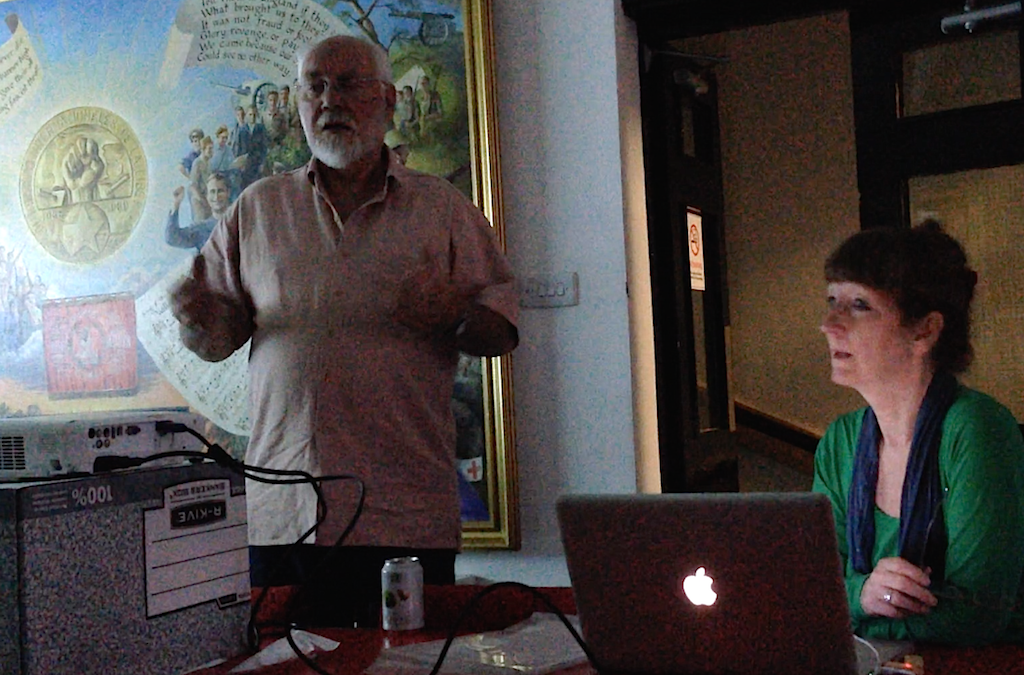
A series of talks have been taking place at ‘Marx Memorial Library’ in London’s Clerkenwell Green. The series, organised by Nick Wright, looked at aspects of visual culture, the labour movement and the ‘left’. Speakers represented various practices from banner making to satirical cartoons, photography to documentary history.
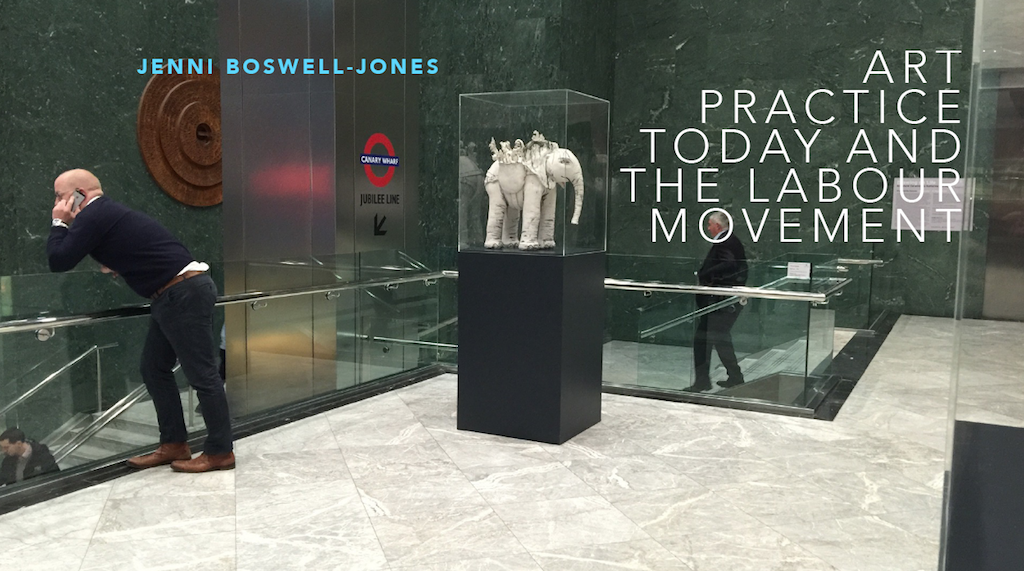
My contribution was under the banner of ‘Art practice today and the Labour Movement’… In questioning the title I attempted to show that art and design permeates every aspect of our ‘collective lives’ proof that creative production is thriving, and that the production output of artists and designers is increasing. The labour movement – (that is the framework within which people work) – is saturated with creative practitioners yet the architecture and landscape of ‘formal employment’ is still not conducive with creative practice. The essence of creative practice is ‘freedom’ – yielding an unpredictable, untamed output which terrifies social control systems. But we live in a controlled world and our labour is constantly compromised – by legislation, finance, bigotry, fear, nepotism… Despite the constraints of production and material distribution the (human) creative urge thrives.
“When we go to bed after a days work and an evening’s relaxation or entertainment – (strolling in the park, going to the cinema, concert, restaurant, or simply watching tele) and put our head on a pillow for 8 hours, we have again been touched a thousand ties by creative practitioners… (artists and designers)….”
I would say that most creative practitioners are practical craftspeople who understand materials and their impact on others. The desire to think and make – to bring solutions to different aspects of life permeates creative practice and, through this, a sense of human responsibility is developed.
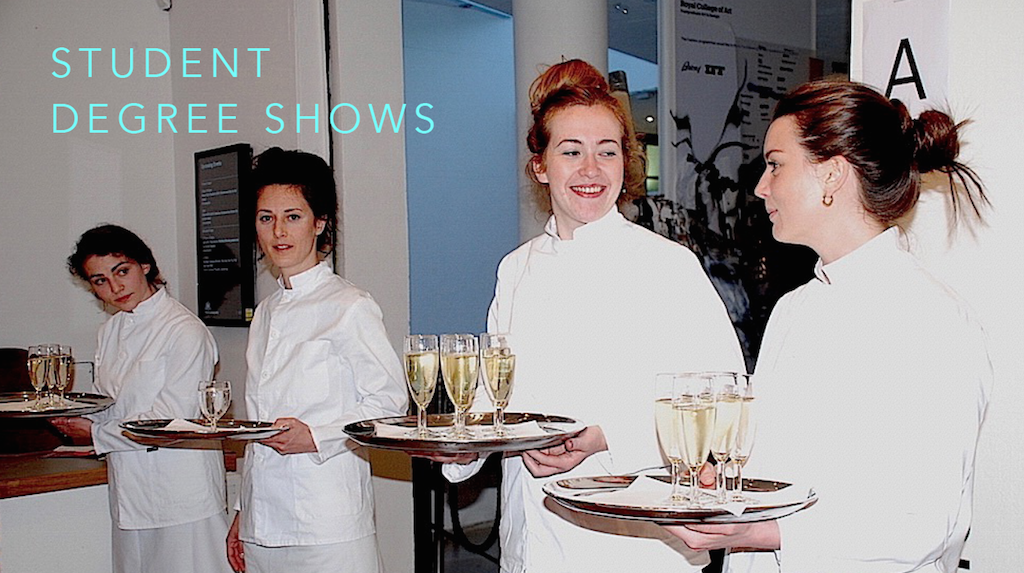
I further questioned how Society utilises growing number of artists and designers – how are they educated – What are the reasons for increasing numbers of Art & Design students. Are the production levels of Art Schools a separate economy? What kind of social structure can absorb an annual output of 40,000 Art and Design graduates? And what are the implications for the organised ‘Labour Movement’?
The shift in (capitalist) employment patterns – that is the way in which we (in Western capitalist countries) understand the division of labour and the manner in which a vast majority are now forced to survive ‘hand to mouth’ within capitalist structures – has changed. Fifty years ago ‘wage slavery’ – that is a fixed term permanent workforce who retire at 65 on a fixed pension – is no longer reality and the gold watches triggering the final ‘countdown’ are no longer presented to worn out labourers. People now have various employments – maybe several jobs – or a mix of benefits and casual work to accumulate adequate finances to get by. Most workers employment status is now closer to ‘free-lance / self employed’ categories – which has been the norm for creative practitioners. For Trade unions such ‘individual’ status has reduced their ability to “represent” the interests of a collective work force ‘under one roof’ against the tyrannical employer. Trade Unions are having to rethink their ‘representative status’ and their attitudes – many of their members are now their own ‘boss’ – who cannot sack themselves, nor force themselves to work in bad conditions for nothing…. ‘0 Hours’ is free choice and conveniently fits in with modern work patterns.
Who should Artists and Designers have a duty to? The combination of alienated workers and detached creative practitioners (product and automative designers) have filled ‘ factory suggestions boxes’ which in turn encouraged the evolution of extreme mechanised production systems making product untouched by human hands. Robotics and containerization have led to massive unemployment, and a de-skilling of the traditional workforce, cutting generations out of the equation for the benefit of the 1%. Is it the irresponsible output of ‘automative designers’ to blame for this or were they just doing their job too well?
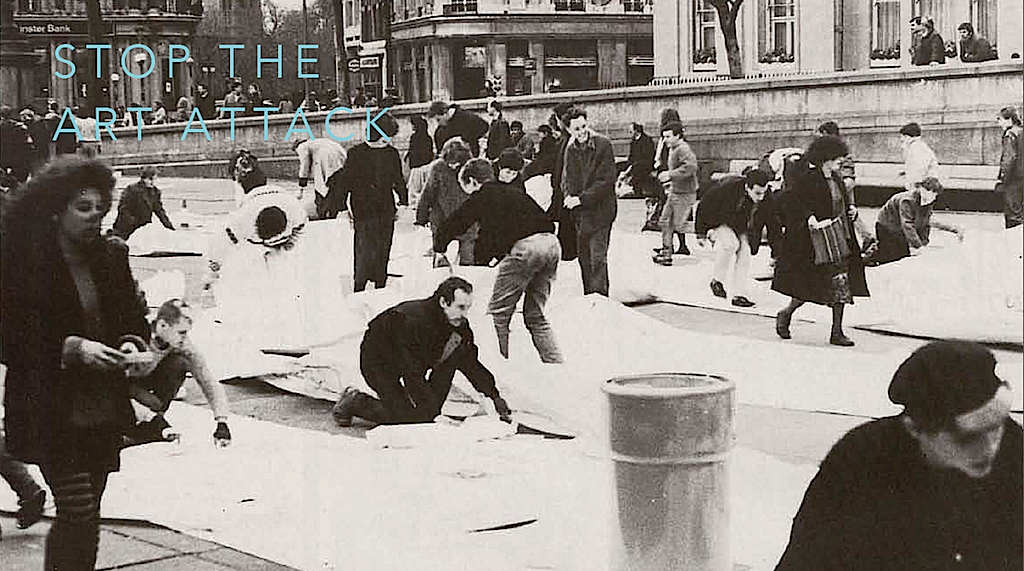
Now – what opportunities can be created to employ the skills of creative practitioners (artists and designers) and what solutions can creative practitioners bring to society for the benefit of 100% of the Labour movement? Historically, for artists, in this country, EU and US there have been models of practice: placements, commissions, part-time teaching positions, statutory solutions such as ‘per cent for art’ and government art purchasing schemes… all of which need to be revisited and new radical approaches invented. Art Practice has always believed that it can bring solutions to universal problems though being unique in its methods, challenging in its approach and generous in its exchange. Maybe it is high time this precept was put to the test.
Jenni Boswell-Jones

An edited version of JB-J presentation “Working Eyes Left – Art Practice today and the Labour Movement” will be published in the Marx Memorial Library Journal in the Autumn.
Presentations in the ‘Eyes Left’ series were also given by:
Christine Lindey – art historian
Phil Katz – writer and web designer
Jesse Hurd – Photo journalist
Martin Rowson – Cartoonist